
Stress is different for all of us, from why we get stressed to how it presents itself and feels. And that goes for every age group too. Stress isn’t just an adult issue; it doesn’t discriminate against age – children suffer with it too. It can just be harder children them to explain and communicate how they’re feeling to parents, carers, and other adults, and for us to understand that stress is what is causing certain emotions and behavioural responses.
In our second blog post for #StressAwarenessMonth, we’re going to be looking at stress in children. How it can present, the symptoms they may suffer and what we as parents, carers and adults can do to help them make sense of what’s going on.
There are many emotional and behavioural symptoms when it comes to stress in children, as Fortis associate therapist Gemma Baker explains:
Gemma also explains that there are physical symptoms, which can include:
If you think your child is stressed, communication couldn’t be more important. Empathy too is key, giving your child the chance to reflect while you have various distractions in your back pocket. Children cannot communicate that they are stressed – they don’t know what that word really means. Instead, words such as sad, confused, and mad tend to be verbalised.
Currently working with school children of all ages full-time, in a school setting, Gemma has various tips and tricks to help you and your little ones learn how to read each other a little bit better.
“Breathing exercises are a great way to regulate and promote relaxation,” says Gemma. “Of course, getting children to practice deep breathing is easier said than done so I have some techniques I always use, on my little ones at home too. One of which, is blowing out a candle. Supervised of course, start with the candle close and let them blow it out. Move it further away, relight, and then let them blow it out. Keep moving the candle further and further away, and they will gradually take deeper and deeper breaths, coming down from that heightened state. Another similar technique is blowing balloons up and letting them go repeatedly.
“It may sound obvious but planning quality time in with children makes a huge difference. Reducing their stress levels through one-to-one contact, as well as through planned activities is a great way to support them. You could plan a movie night, a Lego-off challenge, creative activities, board game nights or baking. During this time, it’s also a great opportunity to really work towards delivering praise, recognition, and encouragement too.
“And don’t forget children mimic, so if you aren’t looking after you own self-care and self-talk when it comes to stress management, they are likely to mirror what they see. That goes for language as well as behaviour.”
One idea we really love, and have seen real value in during lockdown, is scavenger hunts. They are pretty easy to do, with minimal adult input just supervision, and really do distract and relax. Here are a couple of examples:
Spring/Summer Scavenger Hunt
Five Sense Scavenger Hunt
The key when it comes to stress in children is learning, as an adult, parent, or carer, that whatever the resulting symptoms and or behaviour is, there is more often than not a reason behind it. For example, if a child is crying because they can’t have another treat, it’s probably not the withholding of the treat that’s the problem – look for the underlying issues.
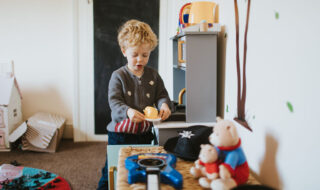
Simple things you can do to start with are play and enjoy music together, sing, draw – use colour as emotions ‘I feel blue or red today’, and of course offer cuddles. The reaction in our bodies to human touch and contact really is magic.
Further things you can do to help children suffering with stress:
DIY makes to start your very own stress awareness tool kit: