
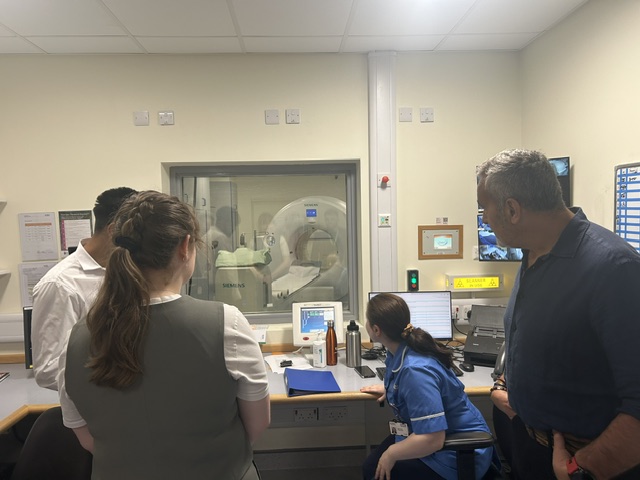
Creating outstanding healthcare environments requires more than architectural expertise, it demands a clear understanding of the clinical, scientific and technological processes that take place within them. To strengthen this knowledge, Alessandro Caruso Architects (ACA) recently attended an Industry Insight event hosted by Future Humber at The Daisy Appeal's Molecular Imaging Research Centre (MIRC) at Castle Hill Hospital in Hull.
The visit provided an invaluable opportunity to explore one of the UK's leading molecular imaging facilities and gain a greater appreciation of the highly specialised environments that support pioneering research, advanced diagnostics and innovative patient care.
ACA is grateful to both Future Humber for organising the event and The Daisy Appeal for opening the doors to this exceptional facility.
The Daisy Appeal is a Yorkshire charity dedicated to improving the diagnosis and treatment of diseases including cancer, dementia and heart disease through investment in cutting-edge imaging technology and medical research. Its continued support of facilities such as the Molecular Imaging Research Centre is helping advance healthcare across the region while benefiting NHS services, clinicians and patients alike.
For healthcare architects, engaging directly with organisations at the forefront of medical innovation provides valuable insight that simply cannot be gained from drawings or technical guidance alone.
Healthcare buildings are becoming increasingly sophisticated as medicine continues to evolve. Architects designing these environments must understand not only how spaces are constructed but also how they support complex clinical workflows, specialist equipment and scientific research.
Visiting operational healthcare facilities enables ACA to see how buildings perform in practice, helping the team develop a deeper understanding of emerging technologies, evolving healthcare requirements and the environments needed to support future models of care.
This commitment to continuous learning ensures that every project benefits from current knowledge and practical experience.
The visit began with an informative presentation from Dr Louis Allott, Director of Radiochemistry, who explained the important work undertaken within the centre before guiding attendees through the facility.
The tour demonstrated the close relationship between architecture, engineering and healthcare. Every laboratory, clinical area and technical space has been carefully designed to support complex scientific processes while maintaining the highest standards of safety, efficiency and regulatory compliance.
It reinforced how specialist healthcare architecture creates the conditions necessary for medical innovation to flourish.
One of the most fascinating aspects of the visit was seeing the hospital's medical cyclotron in operation.
This highly specialised equipment produces radioactive isotopes, including Fluorine-18, which are essential for manufacturing PET imaging tracers. Because these isotopes decay rapidly, they must be produced close to the hospitals where they will be used, making facilities such as the Molecular Imaging Research Centre critically important.
These tracers allow clinicians to detect, diagnose and monitor a wide range of conditions, including cancer, cardiovascular disease, dementia and Parkinson's disease, while also supporting the development of future imaging techniques through ongoing research.
Although the scientific equipment attracts much of the attention, the building itself is fundamental to the centre's success.
Highly specialised healthcare facilities require architectural solutions that go far beyond those found in conventional buildings. Features such as radiation shielding, controlled ventilation systems, cleanroom environments, dedicated radiopharmacy suites and carefully separated operational zones all contribute to creating safe and effective workplaces.
The integration of complex engineering services with carefully planned layouts enables clinicians and researchers to work efficiently while protecting staff, patients and visitors.
During the tour, ACA also visited one of the radiochemistry "hot cells" housing automated equipment used to manufacture PET tracers after radioactive isotopes have been produced.
These heavily shielded environments combine advanced technology with robust architectural design. Lead shielding, specialist glazing, remote handling systems and tightly controlled ventilation all work together to protect staff while maintaining pharmaceutical manufacturing standards.
The visit highlighted how architecture and technology operate as a single integrated system within specialist healthcare environments.
Another valuable insight came from Dr Rebecca Hargreaves, Quality Control Manager, who explained the rigorous testing carried out before any radiopharmaceutical is approved for patient use.
Every preparation undergoes detailed checks to confirm sterility, purity, radioactivity and overall quality. These procedures demonstrate the importance of designing facilities that support highly controlled laboratory processes while maintaining efficient operational workflows.
One of the strongest architectural lessons from the visit was the careful organisation of movement throughout the facility.
Controlled circulation routes guide staff, equipment and materials safely through each stage of the process. Radiation monitoring stations positioned at exit points ensure contamination checks are completed before individuals leave controlled areas, reflecting the importance of integrating safety into the building's layout rather than treating it as an afterthought.
Logical sequencing of laboratories, preparation rooms, quality control areas and support spaces enables the centre to operate safely and efficiently every day.
The visit concluded with an opportunity to view PET/CT imaging, bringing together every stage of the journey from isotope production to patient diagnosis.
It served as a powerful reminder that behind every medical scan lies an extraordinary collaboration between healthcare professionals, scientists, engineers and architects.
Thoughtfully designed environments make it possible for these disciplines to work together seamlessly, ultimately improving patient outcomes through faster, more accurate diagnosis and treatment.
At ACA, designing exceptional healthcare environments means continually expanding knowledge beyond architecture alone. Engaging with clinicians, researchers and healthcare organisations helps ensure that every project reflects current best practice, emerging technologies and the evolving needs of modern healthcare.
Experiences such as this strengthen ACA's ability to create buildings that support innovation, operational excellence and positive patient experiences while meeting the complex technical demands of specialist healthcare facilities.
ACA also recognises the vital contribution made by The Daisy Appeal. Through its investment in pioneering research and advanced medical imaging, the charity continues to improve healthcare across Yorkshire and beyond, helping shape the future of diagnosis and treatment for generations to come.