
Architecture shapes far more than the appearance of our towns and cities. The buildings we use every day influence our comfort, health, productivity and sense of belonging. Whether it's a healthcare facility, a school or a community building, the quality of the built environment can have a significant impact on the people who experience it.
At Alessandro Caruso Architects (ACA), we believe successful design starts with understanding the people who will use a space. By placing wellbeing at the heart of every project, we create buildings that are functional, sustainable and designed to improve everyday life.
Wellbeing architecture is a people-centred approach to design that prioritises the health, comfort and experience of building users. Rather than focusing solely on appearance or technical performance, it considers how a space will affect those who occupy it each day.
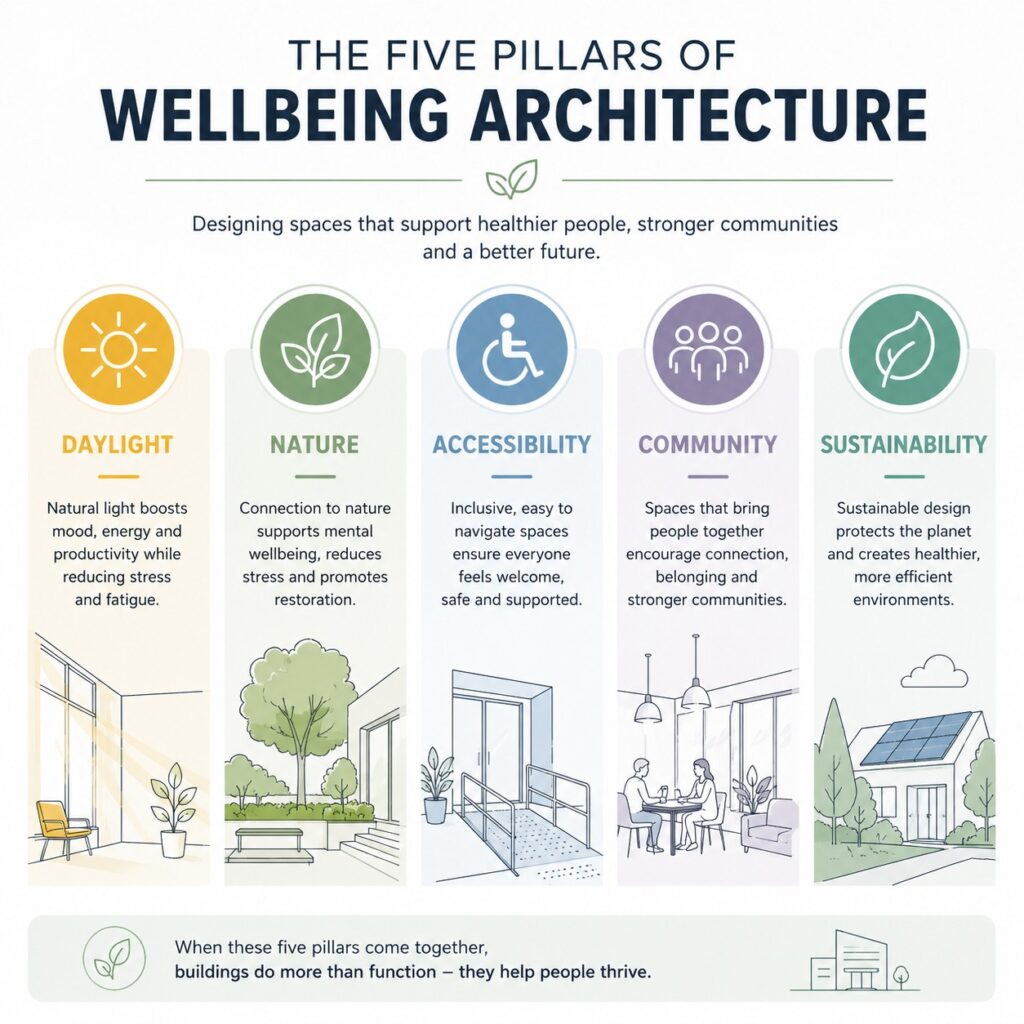
Designing with wellbeing in mind involves carefully balancing elements such as:
Maximising natural daylight.
Creating healthy indoor environments through effective ventilation.
Strengthening connections to nature and outdoor spaces.
Reducing unwanted noise with thoughtful acoustic design.
Ensuring buildings are accessible and inclusive for everyone.
Designing welcoming spaces that encourage social interaction.
Selecting sustainable, low-impact materials that contribute to healthier environments.
When these principles are integrated from the outset, buildings become places that actively support physical and mental wellbeing while remaining practical and efficient.
The spaces where we live, work and spend time have a direct influence on our daily lives. Good design can improve how people feel, encourage positive behaviours and create environments where individuals can thrive.
A wellbeing-focused approach to architecture can help:
Create calmer, less stressful environments.
Improve concentration and productivity.
Support recovery within healthcare settings.
Encourage movement and social connection.
Make buildings more accessible and inclusive.
Increase comfort and overall user satisfaction.
Whether someone is receiving medical treatment, studying in a classroom or attending a local community facility, the surrounding environment plays an important role in shaping their overall experience.
At ACA, wellbeing is embedded within our design process rather than being considered as an afterthought. Every project begins by understanding the client's objectives and the needs of the people who will use the completed building.
By carefully considering how spaces function in everyday use, we create environments that support both practical requirements and human wellbeing.
Healthcare buildings should provide reassurance during what can often be challenging or emotional experiences.
ACA designs healthcare environments that prioritise clear navigation, natural light, privacy and accessibility while creating welcoming spaces for patients, visitors and healthcare professionals alike. By carefully planning layouts and considering every aspect of the user experience, our aim is to create environments that support both wellbeing and operational efficiency.
Well-designed educational buildings can positively influence learning, engagement and staff wellbeing.
ACA creates flexible learning environments that make the most of natural daylight, provide adaptable teaching spaces and encourage collaboration. Incorporating quiet breakout areas and stronger connections to outdoor learning environments can also help create schools that are enjoyable, inclusive and inspiring places to learn.
Community facilities play an important role in bringing people together, making accessibility and inclusivity essential design considerations.
Whether delivering community centres, charitable facilities or public buildings, ACA focuses on creating welcoming spaces that are easy to navigate, adaptable for future needs and designed to encourage interaction. Buildings that support community engagement can continue delivering value for many years after completion.
People-focused architecture and sustainable design naturally complement one another. Buildings that perform well environmentally often provide healthier and more comfortable spaces for their occupants.
Features such as energy-efficient construction, effective insulation, high indoor air quality and responsibly sourced materials contribute to both environmental performance and user wellbeing.
At ACA, sustainability is considered alongside wellbeing from the earliest stages of every project. This integrated approach helps create buildings that are resilient, efficient and designed to perform successfully for the long term.
Designing with people in mind creates lasting value for clients, building users and the wider community.
Some of the key benefits include:
More comfortable and enjoyable indoor environments.
Reduced stress for occupants and visitors.
Improved patient experiences within healthcare settings.
Community buildings that encourage interaction and inclusion.
Long-term sustainability and improved building performance.
By considering both human needs and environmental responsibility, wellbeing architecture delivers benefits that extend far beyond the building itself.
Every project presents its own unique challenges, but one principle remains constant: architecture should improve the lives of the people who use it.
At ACA, we combine creativity, technical expertise and sustainable thinking to deliver buildings that balance performance with human experience. Whether designing healthcare facilities, educational environments or community buildings, our goal is to create spaces that are welcoming, functional and built to support wellbeing for generations to come.
As expectations of the built environment continue to evolve, designing for wellbeing is becoming an essential part of responsible architecture. By putting people at the centre of every project, ACA creates places that not only look exceptional but also make a meaningful difference to how we live, learn, work and connect.