
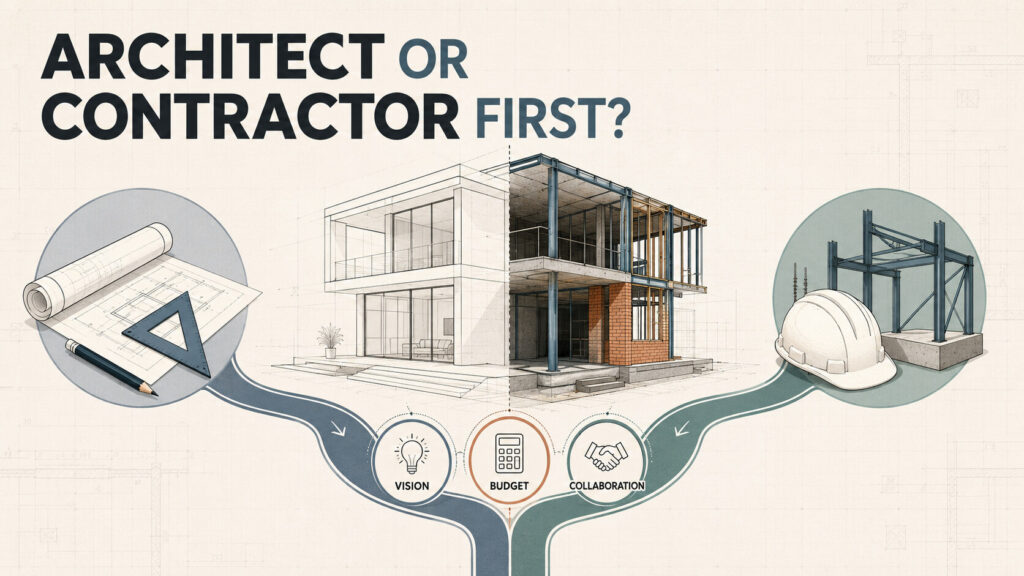
According to Alessandro Caruso Architects (ACA), there is no single approach that suits every development. The most appropriate decision depends on the project's complexity, budget, objectives and preferred procurement strategy.
What matters is ensuring that the right expertise is available when important decisions need to be made.
Starting a building project involves a series of important decisions, but one of the earliest can have a significant influence on how the development progresses: should a business appoint an architect or a contractor first?
For organisations planning new premises, refurbishments or major extensions, making the right appointments at the right time can help establish a clear direction, manage financial expectations and reduce potential complications.
Before appointing a design or construction team, businesses should consider what they want their investment to achieve.
A healthcare provider may need additional clinical accommodation, while a company expanding its premises might be looking to improve operational efficiency, accommodate growth or create a better working environment.
These objectives should inform the project's initial brief, together with the available budget, timescales and any operational requirements.
An architect can help translate these ambitions into a practical development strategy, considering how the proposed building should function, its relationship with the surrounding site and the experience of the people who will use it.
Early discussions can also identify potential planning restrictions, regulatory requirements and other constraints that could affect the project's feasibility.
Establishing these priorities at the outset provides a stronger foundation for subsequent design and construction decisions.
For developments involving complex planning, design or technical considerations, engaging an architect during the initial stages can offer significant advantages.
Architects can assess a site's potential, explore alternative design solutions and help clients understand how their requirements might be accommodated within the available space and budget.
They can also advise on the design process, relevant regulations and procurement options, helping organisations make informed decisions before committing substantial resources.
This early strategic input can be particularly valuable for healthcare, education and commercial projects, where operational requirements and the needs of different users must be carefully considered.
By establishing a coordinated design approach from the beginning, clients may be better placed to manage expectations and avoid unnecessary changes as the project develops.
Although appointing an architect first can be appropriate for many projects, there are circumstances where involving a contractor at an early stage can also provide considerable value.
Contractors contribute practical experience of construction methods, material availability, site logistics, programme management and current market conditions.
Their involvement can help identify potential delivery challenges and provide early feedback on the buildability and likely construction costs of a proposed scheme.
For businesses working within tight financial or operational constraints, this knowledge can be especially useful.
Early contractor involvement does not remove the need for architectural expertise. Instead, it creates opportunities for design and construction professionals to work together, combining their respective skills to develop practical solutions.
The timing and form of this involvement will depend on the procurement route selected for the project.
Cost is often one of the most significant concerns for organisations investing in construction.
However, effective budget management involves more than obtaining a construction price.
Businesses also need to consider design fees, statutory approvals, site conditions, programme requirements and the potential impact of unexpected changes.
Architects can help clients develop a design strategy that responds to their financial objectives, while contractors can contribute construction cost information and advice on practical delivery.
For larger or more complex projects, independent cost consultancy may also be appropriate.
Discussing financial constraints early allows the project team to consider alternatives, identify priorities and make informed decisions about where investment will deliver the greatest value.
This collaborative approach can help reduce the risk of developing proposals that are difficult to deliver within the available budget.
Rather than viewing architects and contractors as competing options, ACA believes their expertise should be recognised as complementary.
Architects bring knowledge of design, spatial planning, technical requirements and the relationship between buildings and their users.
Contractors contribute experience of construction processes, materials, sequencing and delivery.
When these skills are coordinated effectively, potential problems can be identified earlier and solutions developed before they affect progress on site.
Communication between the client, design team and contractor is therefore an important part of successful project delivery.
The approach may vary depending on whether a project follows a traditional procurement route, design and build arrangement or another contractual structure.
Regardless of the chosen method, establishing clear responsibilities and maintaining open communication can help keep the project focused on its intended outcomes.
ACA's approach to architecture places considerable importance on working closely with clients, contractors and specialist consultants throughout the development process.
An example is the award-winning Scunthorpe Community Diagnostic Centre, where ACA worked collaboratively with construction partner Helix CMS.
The project demonstrates the value of bringing architectural and construction expertise together to address the practical requirements of a healthcare development.
Effective coordination between design and delivery teams allows technical considerations, construction challenges and client requirements to be discussed throughout the process.
For complex healthcare projects in particular, this cooperation is essential to developing environments that are functional, efficient and appropriate for their intended use.
ACA recognises that successful buildings depend not only on strong architectural ideas but also on the knowledge and experience required to turn those ideas into reality.
For business owners and organisations considering a construction project, the question of whether to appoint an architect or contractor first should be guided by the nature of the development.
Projects requiring detailed feasibility studies, planning advice or a clearly defined design vision may benefit from appointing an architect at the outset.
Where construction methodology, programme or buildability presents particular challenges, early contractor input may also be advantageous.
In some cases, involving both disciplines during the initial stages can provide a more comprehensive understanding of the opportunities and constraints.
Ultimately, the priority should be to establish a realistic project brief, understand the available budget and select a procurement approach that supports the client's objectives.
By encouraging collaboration and informed decision-making from the beginning, businesses can create a stronger foundation for developments that are practical, financially considered and aligned with their long-term ambitions.
To discover more about ACA's architectural services and project experience, visit www.aca-i.com.